Friday, February 6, 2015

Baby Led Weaning: A Beginner's Guide to Letting Your Baby Feed Herself

Whether you breastfeed or use formula, giving your baby solids for the first time can be a bit daunting (at least with the first kid!). As my baby was nearing her six monthiversary I started to feel a bit apprehensive about starting her on solids.  I had so many questions! Was she really ready? What should I start her on? How much should I give her? What if she gets constipated? How much solid food vs. breastmilk should she have? I imagined my kitchen as a baby food war zone -- mushy puree, painstakingly made from scratch, flying every which way, splattering my floors, my table, and every nook and cranny of our high chair. I saw my sink overflowing with smoking blenders, my stove stacked with pots and a mountain of half-eaten baby food jars collecting in the fridge (because I'd given up on making it myself, of course). Every piece of our clothing was newly tie-dyed with splotches of rejected sweet potato orange and chunks of some kind of mystery cocktail of green. I could hear her screams mixed with my crazed pleadings as a spoon quivered towards her unrelenting lips. 

Okay, okay, I will admit that was a bit dramatic, but I really wasn't looking forward to going to war with my baby over food. I spent countless dinners watching little ones fight with their parents (and grandparents) over the spoon. I was not looking forward to joining the struggle.

When I first heard about Baby Led Weaning (or BLW for short) it sounded crazy and impossible and waaaay too good to be true. With BLW parents skip spoon feeding completely and just give their baby more or less what they eat, letting their 6+ month old feed him- or herself finger foods from the get go. No battles. No mush. Just babies, having fun exploring food. Basically you have this 

 
instead of this

(Sorry it's grainy... it was a copyright free pic!)

After doing some more reading and watching some helpful videos on youtube I decided I wanted to give this thing a try and see what happens.  So far, both me and my baby have loved it! And since parents who have tried BLW tend to get "evangelical" about it (at least according to this article), I decided to put together a little guide for parents, who like me, have never heard of Baby Led Weaning.


The Basics

Let's start things off by going over the basics of Baby Led Weaning.

First, let's talk about what baby led weaning really means.

Baby led weaning does not mean you stop giving your baby breastmilk or formula. Breastmilk or formula should make up the majority of your baby's diet until they are at least one year old. Because the term Baby Led Weaning was coined across the pond in the UK it uses 'weaning' in the British sense, ie "adding complementary foods to baby's diet," rather than the American, "to give up breastfeeding." Some people prefer to call it Baby Led Feeding, Baby Led Eating, Baby Self-feeding, etc. As Louis and Ella would say, tom-aye-to, tom-ah-to. Just keep breast- or bottle-feeding your baby until they're at least a year. 

The "baby led" part simply means you sit back and let your baby do their thing while you as a parent neither force anything upon them or start breaking into a sweat over how or how much they're eating.

Simply put, baby led weaning means letting your baby feed him or herself from the get go.  Not only is your baby absolutely capable of safely feeding him- or herself at around six months, chances are they'll have a lot more fun with it, too.

But what's wrong with purees? 


Purees aren't bad, they just aren't necessary. Pureed baby food first became popular around the early 1930s.  Back then, doctors suggested starting babies on "solids" as early as three or four months old. Because babies at such a young age aren't yet capable of chewing, mothers started turning to purees and cereals to feed their babies. In no time, mush became the accepted norm as baby's first foods. Today health authorities like the World Health Organization, Health Canada and the UK Departments of Health* all recommend waiting until babies are at least six months old before introducing solids. At this age babies' digestive systems are more developed and ready for solids, their tongue thrust reflex (nature's way of protecting baby from swallowing anything they can't handle) has begun to recede and they are  fully capable of feeding themselves.  No purees needed!

*The American Academy of Pediatrics recommends starting solids between four and six months, but adds that babies should be able to sit up with little to no support and grab things to take into their mouth. Most babies aren't capable of doing both of these things until about six months of age.

Don't believe me?  Check this out


What does BLW look like?

BLW looks a lot like the video you just watched. As explained by Gill Rapley and Tracey Murkett in Baby-Led Weaning: The Essential Guide to Introducing Solid Foods - and Helping Your Baby to Grow Up a Happy and Confident Eater:
  • The baby sits with the rest of the family at mealtimes, and joins in when she is ready
  • She is encouraged to explore food as soon as she is interested, by picking it up with her hands - it doesn't matter whether or not she manages to eat any at first
  • Food is offered in pieces that are the size and shape that the baby can handle easily, rather than as purees or mashed food.
  • She feeds herself from the start, rather than being spoon-fed by someone else
  • It's up to the baby how much she eats, and how quickly she widens the range of foods she enjoys
And it's really that easy.  You give you baby food and your baby eventually figures out how to eat it. For the first little while it may seem like your baby is doing everything with their food except eating it but you might be surprised by the story the diapers tell. 

Signs of readiness

It's important to wait until your baby is really ready before you start solids. In addition to waiting until at least six months, your baby should also be doing the following: 
  • Sits up with little or no support
  • Reaches out to grab things and then takes them in her mouth quickly and accurately
  • Gnaws on toys and makes chewing movements
  • Starts putting food in her mouth herself
Even then, your baby might not be interested in food yet. That's okay. When you let your baby decide whether or not they want to try solids, you're ensuring that your baby really is ready.  

First Foods

The idea behind BLW is to eventually just give your baby whatever you eat but it's probably a good idea to ease them into things with foods that are easier to chew, first. Some great first foods include:
  • Bananas
  • Pears
  • Avocado
  • Mangoes
  • Apple (steamed or baked until tender)
  • Peaches/nectarines
  • Plums
  • Sweet potato (baked -- I like to cut them into fries, toss with some olive oil - but NO SALT - and then bake for about 30 minutes at 400F, flipping them halfway through)
  • Squash (baked)
  • Carrots (steamed)
  • Broccoli (steamed)

Try to cut food into stick shapes as these are easier for babies to hold (your baby likely won't be able to pick up little pieces of food until s/he develops a "pincer grip" at around 9 months). For more slippery foods like bananas or mangoes I usually leave part of the peel on so it's easier to hold. For example, I often cut bananas into chunks a couple inches long and then quarter each chunk, leaving the peel on. This gives my baby a nice little stick she can easily grasp. I've also read you can trip dipping mushier foods like avocados in crushed whole grain cereal to make them easier to hold on to, too.

Some other advice I've found:
  • Breads - Try lightly toasting bread before giving it to your baby. Also stick to whole grain breads without any seeds or nuts (choking hazard). 
  • Soups or dips - Soups or dips are fine, just make sure you're still giving your baby control. You can dip their spoon for them and then pass the spoon over (so they're the one actually putting the food in their mouth) or use a piece of bread or pita as a dipper 
  • Meat (like chicken or turkey) - We haven't given our baby any meat yet but it's recommended to serve in big chunks that are easy to pick up and hold (but not small enough that they could choke on it). Your baby probably won't be able to chew much, if any of it, but I've read babies like to suck on meat
  • Cooked pasta - start by just giving them the pasta plain, without any sauce (easier to hold) and use whole grain varieties whenever possible
  • Make sure any food that's been cooked beforehand (steamed, roasted, etc) is cool enough for your baby to eat before you give it to them. I like to stick hot foods on a plate in the freezer for a few minutes before I give it to my baby. Make sure you check the temperature in the middle before handing it over, too. 

BLW purists will tell you to just feed your baby whatever you're eating, whenever you're eating from the get go - so long as your family doesn't have a history of allergies. On the other hand, pediatricians often recommended only introducing one food a week to make it easier to spot the culprit in case baby has a bad reaction to something. We've kind of mixed these two pieces of advice, usually waiting a few days between new foods. We've been at BLW for about a month now and our baby has had bananas, pears, mangoes, squash, sweet potatoes, broccoli, carrots, green beans and a little pancake. I also give her half of a baby spoonful of my yogurt each morning.  

For the first year, food is more for fun

It may take a bit of time for your baby to figure out how to successfully wrangle food into his mouth (especially more slippery foods). Even when your baby does successfully get food into his mouth, chances are quite a bit (if not all) of it will just come sliding right back out. This is both totally normal and completely okay. Since you're still regularly breast- or bottle-feeding your baby, you don't have to worry about how much your baby is really eating. For now, mealtime is a learning experience. Your baby is learning about taste and textures, colors, smells and shapes. They're working on their hand-eye coordination and figuring out how to bite and chew. You'll be amazed at how quickly they figure things out!  Eating for calories can come later.  For the first year, meals can be more for fun as your child builds a positive relationship with food.  


When to feed the baby

BLW pros recommend feeding your baby (or well, letting your baby feed herself!) whenever you eat yourself. Since you're still breast- or bottle-feeding your babe it's fine if you skip a meal here and there though. In our house, my baby also gets some food while I eat breakfast and then lunch and dinner vary depending on how the day goes. In addition, for the first little while, your baby won't connect eating with filling her tummy so experts also recommend sitting your baby down to eat about an hour after breast- or bottle-feeding her. If they're hungry, babies can become easily frustrated with food.


Oh yeah, it's messy

I almost forgot to include this one. Learning to eat is messy business. But it's the good kind of messy. Your baby will smash, smear, drop, squish, squash, crumble and spit out just about everything on her tray as she learns to eat but hey, the kid's learning to eat! I stick one of these bibs with sleeves from Ikea on my babe (usually with another bib on underneath) and let her have at it. She's actually usually pretty good at keeping her food on her tray but a few things always fall overboard. I've heard putting a plastic table cloth under baby's chair can help contain the mess. Added bonus, with BLW at least when my baby spits something out it just lands in a little chunk on her tray (which she may or may not give a second shot at making it into her mouth). With purees the food gets sprayed and glopped everywhere. 


You'll end up throwing away some food

Your baby isn't going to eat everything you give them.  I try to save what I can for later but I end up throwing quite a bit away each day.  I tell myself it's a price I'm willing to pay to help my baby learn to feed herself a healthy amount of food. To help avoid waste, experts suggest giving your baby a variety of foods but only a little bit of each item.


Keeping your baby safe

Now that we've gone over the basics, let's make sure you know how to keep your baby safe when eating.


Make sure your baby is sitting upright

Leaning your baby back or sitting them in a reclined seat (like a bouncer) for meals drastically increases the risk of choking whether you are spoon-feeding or your baby is feeding herself.  Make sure you baby is seated upright at all times during meals.


Don’t let anyone except your baby put food into her mouth

When babies put food in their own mouth they are in control of it. If they can chew it, they will. If they can move it to the back of their mouth and swallow it, they will.  If they can't do these things, the food will just fall out (so long as they're sitting upright). Allowing your baby this control keeps him safe. Imagine if someone started shoving food in your mouth. It'd probably be pretty hard to eat safely! This also helps keep your baby safe from smaller foods he isn't ready for yet.  As explained by Rapley and Murkett, 

"The link between what the baby can do with his hands and what he can do with his mouth may also help keep the BLW baby safe. When a six-month-old baby first starts to feed himself he can't pick up the sorts of food that he might have trouble moving around with his tongue, such as raisins and peas, so they are unlikely to get into his mouth. It's only as he gets older (about nine months) that he will begin to use his finger and thumb in the "pincer grip" that enables him to pick up tiny objects. By this time...his chewing skills will be well advanced. This means that once he can get a raisin to his mouth he will almost certainly be able to manage it safely."

Learning to chew and then swallow

One of the things I love most about BLW (besides how easy it is on a lazy mama like me), is my baby is learning to chew first and then, eventually, swallow. When you spoon-feed your baby pureed foods they don't have to chew -- they can just slurp it off the spoon. This works great until they start encountering lumps. With BLW my baby is learning to chew first, and then swallow. Not only does this reduce her risk of choking, building good chewing skills also helps with the development of speech and good digestion.   We've been doing this BLW thing for almost a month now and while she'll occasionally gag, she hasn't choked once. 

The difference between gagging and choking

Our gag reflex is designed to help us move food that is too big for us to swallow safely away from our airway (preventing choking). Although the gag reflex is triggered at the back of the tongue in adults and older children, in a six month old baby the gag reflex is triggered much farther forward on the tongue. Not only does this prevent your baby from choking, it also helps teach her how to handle food in her mouth. As Rapley and Murkett explain, "When a baby has triggered this reflex a few times, by putting too much food in his mouth or pushing it too far back, he learns not to do it."

So how do you tell the difference?  If your baby is making noise, they're likely just fine. Give them a moment and you'll soon see a chunk of food make it's way to the front of their mouth or all the way back on their tray. Below is a video of a normal gag reflex.


If you're baby is unable to cough, cry or breath it's time to take action. Although you probably won't ever need it, here's a great video to walk you through what to do when a baby is choking.  


Foods to Avoid

With BLW you can give your baby almost anything BUT there are still some foods you should avoid
  • Salt - Babies shouldn't have more than 400mg of sodium a day  (their little kidneys can't handle it!) so keep your baby's salt intake to a minimum. Buy fresh or frozen fruits and veggies as much as possible and avoid giving your baby fast food or pre-made meals as these are often incredibly high in sodium. Make sure to read those nutrition labels!
  • Sugar - You need to keep your baby's sugar intake down, too, for the same reason why you and I shouldn't have too much sugar.  Plus, you don't want to encourage a sweet tooth!
  • Whole nuts - nuts are a choking hazard and should be avoided until your child is at least three years old 
  • Honey - Honey contains botulism spores and should be avoided until your baby is at least a year old. This includes things like Honey Nut Cheerios, honey graham crackers, etc. 
  • Cow's milk - Don't give your baby cow's milk until at least a year. Other dairy like cheeses and natural yogurt is okay, though (go for whole milk varieties)
  • Shellfish - lobster, prawns, crab and shrip
  • Whole grapes, cherry tomatoes, cherries, olives - Also a choking hazard. Make sure to halve or even quarter before giving to baby and remove any pits
  • Popcorn, hard candies, etc - also a choking hazard

Some foods can also be hard on a baby's digestive system or are more likely to cause an allergic reaction. These should be introduced very gradually. These foods include:
  • Tomatoes - harder to digest
  • Corn - Also harder to digest
  • Citrus fruits - oranges, grapefruit, lemons, limes, etc can be hard to digest and often give babies rashes. It's recommended to wait until 12 months before introducing citrus to your baby.
  • Peanut butter - There is a huge debate over when to introduce peanut butter.  We're planning to wait until our baby is at least 12 months
  • Berries (especially strawberries) - can trigger allergies
  • Eggs - Egg whites are a big allergy-trigger so avoid giving them to your baby until at least 12 months. Egg yolks can be given around 9 months.

Additional Resources

If you want to learn more about BLW I recommend taking a look at the following resources:
  • ME! I'm not a BLW expert by any means but I did quite a bit of research before starting and I've got some experience under my belt. Feel free to comment with any questions you may have  and I'll do my best to answer 

*** Although this post was not sponsored it does contain affiliate links.  I make a small profit when you buy products from these links at no additional cost to you***

Monday, January 26, 2015

12 Reasons Why I Love Babywearing

Women throughout the world have been wearing their babies for thousands of years (if not from the beginning of time!).  From Nepal to Peru, Ghana to Indonesia, mothers all over the world have found different ways of using scarves, shawls or even just large pieces of cloth to carry their babies along with them as they go about their work every day.  Do a quick image search for "babywearing" and you'll find something that looks more or less like this


Women (and some men!) from all over the world wearing their babies in different ways.  And there's a good reason for it.  Not only is babywearing incredibly convenient for a busy mother, it's also a beautiful way to bond with and protect your baby.  Although the practice of babywearing declined in the West (North America and Western Europe) in the 1900s, I am incredibly grateful babywearing in the US is on the rise.  I don't think I could survive as a mother without it.

love, love, love babywearing. I wear my baby every day and just about every where we go.  I wear my baby at home, I wear my baby to the grocery store, I wear my baby when we go for walks, I wear my baby at the mall and I wear her on our way to play group. I've worn my baby on public transport and I've worn her on an airplane. Heck, when she was really little I used to wear her at church, too. I am 100% serious when I say that baby wearing has saved my sanity and made life easier as a new mother. 

Although I'd seen countless mothers wearing their babies every day during my time working and researching in West Africa, I didn't really look into babywearing until I was pregnant with my first babe. As I did more research about the benefits of babywearing I quickly realized this was something I wanted to try. I researched different carriers (soft structure carriers vs. wraps vs. slings?), different brands (Ergo, Boba, Becco, Moby?) and ultimately ended up making my own wrap (<$10 of fabric vs. $30-$80 for a brand-name wrap -- I picked the cheap option) to use while my baby was little. My sister-in-law also snagged us a free Baby Bjorn (not such a fan) and we got an ERGObaby Four Position 360 Baby Carrier (LOVE!) as our baby started getting heavier and harder to carry in the wrap.  

It's been almost seven months now and guess what?  I still love babywearing.  And I want to share some of the reasons why.


1. It keeps my baby close and snug
When my baby was first born I was ridiculously anxious when she was anywhere but in my arms.  My husband used to try to take her so I could get some sleep but I'd spend the whole time worrying about her instead (anyone else hear phantom babies crying?). Even now that she's a lot bigger I don't like leaving her.  Babywearing lets me keep my baby close and snug where I know she's safe and happy. Goodbye mommy anxiety.

2. SHE feels safe and secure
There's nothing quite like a ride in the baby carrier to calm my little one down when she's upset. Ever since she was just a few weeks old I've been using our baby wrap or carrier to help soothe my baby. When she was teeny tiny I think the wrap reminded her of being in the womb -- she was snug and close to mom -- and she'd always calm right down as I walked with her.  Now that she's a little older, I think she knows that when she's in the baby carrier she's safe and secure and that mama isn't going anywhere.  The rocking motion created by walking or swaying side to side has always helped soothe her to sleep, too.

Which leads me to....

3. She takes the most awesome naps 
There are basically two ways I put my baby to sleep at this point in her life. She usually either falls asleep nursing or I put her in the carrier and gently rock her to sleep. She can't resist the side to side sway. Sometimes I try to take her out and put her in her bed but I usually just leave her in the carrier.  In her bed she'll usually nap for 30-45 minutes.  In the carrier it's usually somewhere around two hours.  Which would you choose? 


4. It gives me my hands back 
When I asked parents in a Facebook group I'm in what they love most about babywearing A LOT of them said "getting things done!"  Whether she's asleep or not, wearing my baby is a wonderful way to be hands free while still keeping my baby close. I can do my grocery shopping in peace (the few times we tried leaving her in her car seat she pitched an absolute conniption fit), I can do the dishes, work on my blog (yup, I'm wearing my sleeping baby right now), bake, clean, etc. So far I haven't really tried cooking while wearing her but once I'm comfortable wearing her on my back I'll probably try that, too.  I know a lot of moms love to cook with their babies.  

Check out this mama getting work done with her baby snoozing happily on her back
Another mom I talked to said babywearing made the transition from one child to two a lot easier on both her and her older child. She loved that she could keep her newborn close while still being able to play with her older son.

5. Helps deepen your bond
Wearing your baby is an incredible way to help deepen your bond. Not only is it easier to respond to your little one's cues, being in physical contact with your baby releases oxytocin, or the "love hormone," helping trigger feelings of love and connection to your child. In The Second Nine Months, an article about babies' need to be held, Elizabeth Antunovic writes,    

"Our silent and most potent language, touch, is the medium through which parent and infant communicate and become attached, each tender touch strengthening the bond between them... She is not bonded to material things like a stuff animal to hug, a soft blanket to cuddle, or an artificial nipple, but she looks to her mother or a real person for comfort."

Babywearing isn't just for mom, either.  Dad, grandparents, aunts, uncles, siblings (if they're old enough) and other caregivers can get in on the action, too. Some adoptive parents have also found babywearing to be a beautiful way to bond with their baby.  


Check out this sweet grandmother bonding with her granddaughter in a stretchy wrap. She says. "I have only had a very small amount of time with her since she's been born, but it was very beneficial to our bonding." 
Snapped this one while I was working in Mali, West Africa where older daughters often take charge of their younger brothers and sisters.  In both Mali and Ghana, I rarely saw a baby NOT strapped securely to someone's back

6. It helps keep me healthy
Babywearing is great for both your physical and emotional health.  Not only has it been found to help prevent or treat postpartum depression, it also helps with anxiety and builds confidence in new parents. Although I didn't struggle with postpartum depression, I definitely experienced anxiety and sadness at times. Because babywearing helps keep my baby calm and happy, it helped me feel more confident as I learned to meet her needs and respond to her cues. Babywearing is also great exercise. It's like lugging a 7-35 pound weight around with you all the time! Because your baby is kept so close it can also help encourage lactation, too.  

7. Improves communication (and less crying!)
Keeping my baby close makes it easier to read and respond quickly to her cues. Because I can respond immediately to her cues, it also means my baby doesn't have to cry out to get my attention. Plus, she tends to be very calm and happy when I wear her anyways (see #2)  In fact, a lot of babywearing mamas I've talked to say their babies hardly cry at all. According Antunovic this also helps to build trust and confidence in babies:    

"When a baby is held close to her mother, her cues are easier to read. Communication between them is made easier. When her cues are responded to, she learns that she can 'trust' that her needs will be met, that she is loved and will be provided for. This sets the foundation for her fundamental self-esteem and the foundation for all subsequent relationships that she will have in her life."

8. It's so much easier to get around
I don't know about you, but I kind of find strollers to be a big pain. I know they have their uses, especially when your baby gets too big to carry, but at this point in my baby's life, I hardly ever use ours. And who wants to lug a baby around in a big heavy car seat?  I just find it so much easier to use our baby carrier. She's a lot happier (see #2), I'm a lot happier (see #1-7) and I don't have to fight through crowds or worry about uneven terrain.  It's just me and my baby, happy, snug and safe. 

We recently traveled to visit my family over the holidays. Wearing my baby made the proccess so much easier. First off, I had two hands to manage my luggage (see #4). Security was a breeze.  I didn't have to worry about gate checking a stroller and I didn't have to stand around waiting for said stroller to be brought up when we landed. And I had a safe and secure place to keep my "lap child" during our flight, too. As one mom told me, "In the past week, I got through four airports like a boss with my Tula [a brand of baby carriers]. The car rental lady was like 'usually parents are struggling with their kids and their stuff but you've got it together.'"


9. Breastfeeding handsfree
Okay, I only just tried for the first time a couple days ago but it was pretty awesome. It felt so empowering to be able to feed my baby AND get dinner ready AT THE SAME TIME. I am mama, hear me roar! I can see this being really handy while I'm out and about, too. Breastfeeding. Hands free. Standing up. Bam!

Here's a quick and easy how-to video from the Leaky Boob. It's done with an Ergo but I'd think the same method would work with most soft structured carriers (SSCs like Ergos, Bobas, Beccos, Tulas, Lillebaby, etc).


Anybody else want a top like that?

10. Provides more opportunities for learning 
Babywearing gives my little one a safe place to view and interact with the world around us.  She can watch as I chop veggies, or point out a pretty flower on our walk as we explore the world together. She can observe and process what's happening around her -- all from the safety of mama's arms (or well, mama's chest really but that just sounds kind of awkward). As Antunovic explains, 

"When carried in her mother's arms, the child gets a safe place from which to view the world, It is from this safe known place that babies learn about the unknown. When a baby is in a calm and alert state and in touch with her mother, she is in the optimum state for observing and processing all that is going on around her. These different opportunities for learning create the sparks for the neurons in her brain to grow and branch out and meet and intertwine with other neurons. The more these neurons grow and branch out, the greater the brain growth."

11. It's healthier for my baby 
Babies need to be held. A lot. Neurologist Richard Restak goes as far as to say that, "Touch, it turns out, is as necessary to normal infant development as food and oxygen" (as quoted in The Second Nine Months). FOOD AND OXYGEN PEOPLE! It seems like more and more people, however, are simply moving their babies from one container to the next these days.  Babies go from a swing to a bouncer to a car seat, to a play mat and then back to the swing again. Now, I'm not saying you have to hold your baby every second of every day or that you're a bad parent if you use a swing, bouncer, play mat or car sear (I've certainly used all of them) -- sometimes you've got things to do and you need your hands! Babywearing, however, offers another, potentially healthier avenue that allows you to touch, hold and snuggle your baby while also getting work done.

Added bonuses, since baby isn't spending a lot of time on his/her back, babywearing can help prevent flat head syndrome! I've heard babywearing is great for babies with acid reflux (keeps the baby upright) and it also helps keep prying, germy hands away, too! As cute as those "NO TOUCHING! Your germs are too BIG for me!" signs are, I'd rather just wear my baby.  When I'm babywearing I've found that people tend to miraculously hold back more (I'm guessing because my baby is tucked away close to my chest).  If they do still touch my baby, they're more likely to touch the wrap/carrier or maaaybe squeeze her little foot.  I much prefer that to them pinching her cheeks or playing with her fingers.

12. There's no better view!
There are few things that fill me with more love and joy than my sleeping baby's face. When I'm babywearing I love looking down her face rested on my chest, listening to her quiet little breaths.  It really doesn't get much better than this


Those are my top 12 reasons for loving babywearing but what about you? Do you babywear?  If so, what do you love most about it?


*** Although this post was not sponsored it does contain affiliate links.  I make a small profit when you buy products from these links at no additional cost to you***

Tuesday, January 20, 2015

Six DOs and DON'Ts for keeping your baby safe on the road

When I first started reading up on car seat safety as a preggo mama-to-be I was shocked at just how much there was to learn about proper car seat safety and even more surprised (horrified?) at how many parents were unknowingly putting their babes at risk every day. Turns out, there's a lot more to car seat safety than simply clicking a few buckles and then carting your babe around wherever you go.  I quickly learned that when it comes to keeping babies safe in the car, Mad Eye Moody was right. Nothing but "CONSTANT VIGILANCE!" will do.


To help my fellow mamas and papas (or anyone who ever has a baby in their car) make sure their babies are safe, here's a handy list of do's and don'ts (complete with informative videos) when it comes to transporting your little one(s) in the car.


1. DO your research beforehand and make sure your car seat is properly installed  
Make sure to read both your car seat and vehicle manuals before installing your car seat (or go read them right now if your car seat is already installed -- about 75% of car seats aren't installed properly so chances are there's something you could improve upon). I also highly recommend watching an installation video from a trusted source (ie a certified Child Passenger Safety Technician like The Car Seat Lady) -- they always help make things more clear for me. We found this video to be really handy when it came to installing our Chicco Keyfit 30. When you've finished installing your car seat it shouldn't move more than an inch in any direction when you tug on it. You can also get help installing your car seat from a local Child Passenger Safety Technician (CPST). These are people who are trained to correctly install car seats. You can find one near you here.       

2. DO install your car seat in the safest place in the car
The safest place for your baby is snugly secured in their car seat in the back seat.  Never install your child's car seat in the front passenger seat.  All children 12 and under should ride securely buckled in the back seat. The middle seat in the back seat is the safest place to install your baby's car seat. One study found that children three and under were 43% safer in the middle seat.  If, however,  you have additional children or passengers riding in the back, it's recommended to put the person least protected (ie in a forward facing seat) in the middle seat. Check out this guide from the Car Seat Lady to learn more.   PLEASE NOTE: not all vehicles will allow you to install your car seat using LATCH in the center position.  I only recently discovered that our car doesn't allow LATCH installation for the middle seat. The lower anchors we'd been using for the last six months are actually only supposed to be used for the side seats.  WHOOPS! So we reinstalled the base using our car's seat belt. Phewf!  Check out this overview from the Car Seat Lady for more information about using LATCH in the center seat position. 

3. DO learn how to correctly buckle your child in his/her car seat
It's important that your baby is buckled in tight and snug in their car seat.  If their straps are too loose the intense forces experienced in a car crash (the kind that can cause steel to ripple) could render your car seat useless. To make sure your baby's straps are tight enough, try the pinch test -- if there is enough material left at the shoulders that you can pinch a fold together, your straps aren't tight enough. Also, don't forget to check for slack around the legs! Often simply pulling the "tail" of the car seat to tighten the straps will get the shoulder straps nice and snug but will do nothing for the slack around the legs (don't worry, I've got a video coming up to show you how to fix this). Make sure the chest clip is correctly positioned, too.  It should run from arm pit to arm pit. The straps should not be twisted, but rather lie flat against your baby. In addition, make sure your baby's head isn't tilted forward as this can restrict breathing. Instead, try positioning your baby's head to the side. 


Just in case any (or all) of that was confusing, here's a fantastic video from the Car Seat Lady. Even if you feel like a car seat buckling pro, I highly recommend watching it.


4. DON'T endanger your baby by putting your car seat in an unsafe place.
Car seats are designed to be used in the car and if you have a travel system maaaybe snapped or buckled into your stroller.  That's about it. Car seats are not meant to sit on top of a shopping cart (even though you see parents doing this every. single. time. you go to the grocery store.  Don't do it!  I highly recommend baby wearing instead), they're not a makeshift crib (this news story was enough to scare me into never letting my baby sleep for long periods of time in her car seat), a bouncer or a high chair. Never place your baby's car seat on elevated or uneven surfaces.  For more info check out the video below from Baby Gizmo about How Not to Use an Infant Car Seat. 


5. DON'T fall victim to fluff!
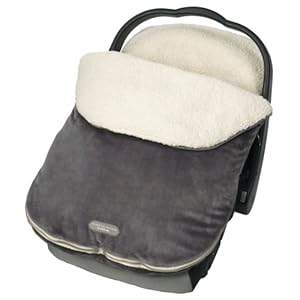
It's freezing cold outside and you and baby need to take a trip in the car. Bundling baby up in a puffy winter coat is actually a big safety hazard, as is using any kind of insert or muff that goes between your baby and the car seat straps (like the popular JJ Cole BundleMe). In the event of a crash, this "fluff" is compressed, making your baby's previously snug car seat straps loose enough to allow your baby to slip out.


Terrifying, eh?  Instead of putting your baby in that puffy coat and your fuzzy car seat muff, dress your baby in tight fitting layers (fleece works great) and tuck a warm blanket OVER your baby if extra warmth is still needed. You can also put your child's coat on backwards over the straps after they are safely buckled into their car seat.  Check out this post from the Car Seat Lady for more information about keeping your baby both warm AND safe in the car.  She's got a great list of products that are safe to use with your car seat, too.


6. DO keep your baby rear-facing as long as possible
Your baby will likely outgrow his or her rear-facing infant carrier somewhere around their first birthday. This does not mean that they are now ready for a forward-facing car seat.  In fact, the American Academy of Pediatrics recommends children ride rear-facing until they are at least two years old.   Because studies have shown that children are five times safer when they are rear-facing most experts encourage parents to keep their babes rear-facing for as long as their seat will allow, even past two years old if they can. Once your baby outgrows their infant carrier, invest in a convertible seat that allows you to safely transport your child in a rear-facing position for as long as possible. Check out this great rear-facing myths busters article from Car Seat for the Littles to learn more.

Although convertible car seats can be expensive, there is a car seat for every budget. Some more affordable brands include Cosco (the Cosco Apt 40RF Car Seat is currently $59.99 on Amazon), Safety 1st (the Safety 1st Air Convertible Car Seat is currently $84.99 on Amazon), Evenflo (the Evenflo SureRide DLX Convertible Car Seat is currently 89.98 on Amazon) and Graco (the Graco My Ride 65 LX Convertible Car Seat is currently $109 on Amazon).  

If you've got a bit more to spend, I recommend the Chicco NextFit Convertible Car Seat or the Britax Boulevard ClickTight Convertible Car Seat. Both are great seats with easy install features.  We ended up getting a smoking good deal on an older model of the Britax Boulevard, the Britax Boulevard G4 Convertible Car Seat.  It doesn't have the cool ClickTight technology (which basically just makes it easier to install) but it's still a great seat. 


6. DON'T forget, CONSTANT VIGILANCE.  Mad Eye is watching.


All jokes aside, it really is important to be vigilant when it comes to car seat safety.  I recommend double checking everything when you put your little one in the car and then it doesn't hurt to check once again.  Double check that the straps are tight enough and that your chest clip is properly placed. Double check that your straps aren't twisted but lie flat against your baby. If you're using a base, double check that it hasn't become loose over time or been mistakenly unbuckled. Double check that your car seat is properly clicked in the base by pulling up on the handle to make sure the car seat connected securely. Double check, double check, double check!
  
I also recommend following someone like the Car Seat Lady on social media (can you tell I'm a fan?). People like her vigilantly post car seat safety tips, informational resources and recall notices. She also has lots of tips for fitting three car seats across. I've learned so much from following her. Just the other day she posted to following from a Facebook fan:

"Hug your babies a little closer tonight... and after they're asleep, read up and make sure they're as well protected as this baby was. Start by watching this video to make sure you're buckling your child properly -http://youtu.be/84CzHRsFoo8
"'My husband, 7 month old daughter, and I were involved in a really bad accident last night... one in which the paramedics said we shouldn't have survived. My husband and I have a little soreness but my daughter was completely unscathed. I attribute a large part of that to learning from you the proper installation of her car seat and buckling her in, your impressing upon me the need to be obsessive about the installation and buckling, and your post on keeping children safe in car seats in the winter. What you do saves lives so please don't stop. After reading your article on winter car seat safety, I ditched my expensive car seat muff (that hurt smile emoticon and she had on a very thin fleece onesie instead of a puffy coat or all-in-one.'"


Constant vigilance about car seat safety could be the difference between life and death for your little one in the event of an accident. You're precious cargo deserves to be protected. 


*** Although this post was not sponsored it does contain affiliate links.  I make a small profit when you buy products from these links at no additional cost to you***


Tuesday, December 9, 2014

Baby on a Budget: How to Refinish Furniture Using DIY Chalk Paint

I've said it before and I'll say it again, when I was pregnant I was obsessed with our baby's room. I wanted it to be perfect.  Problem was, I didn't really have a lot of money to spend. So I got crafty.  And I'm not a crafty person. I'm the kind of person who needs easy peasy, don't have to be artsy, next to impossible to mess up kind of crafts and projects. This is one such project. It's for all you lazy lay-crafters out there who want (fairly) quick results with minimal effort and even less $$ spent.

Amid my crazy pregnant lady planning and obsessings I decided I wanted a cute dresser for our baby's room. Okay, I didn't just want it, I needed it. I figured the kid was going to have a lot of clothes throughout her life and I wanted a cute place to store them. I also didn't really want to buy a new dresser.  Dressers are annoyingly expensive in my opinion.  Luckily, we had swiped a dresser from my in-laws when we got married (and by "swiped from my in-laws" I really mean "were graciously given by my in-laws").  It was a good, sturdy dresser with a reasonable amount of storage but it wasn't exactly cute.  At least not baby room cute.  So hubs and I started talking about painting it. As we talked about borrowing a sander, finding a place to sand it (we lived in a tiny apartment with no good place to really sand something), potentially lugging it to my in-laws to sand, types of paint to use, what color of paint to get, and so on it all seemed like a lot of work.

But then I remembered my furniture refurbing pro of a sister-in-law uses something called chalk paint when she refinishes her garage sale finds. I was pretty sure this magical chalk paint thing didn't need sanding. As I did some more research I learned that chalk paint was incredibly easy to use. You basically just slab on couple coats with a decent paint brush, add a top coat and - voila! You're done! No need to prep the furniture at all. 

Now this! Was right up my alley!


Real "chalk paint" is ridiculously expensive to buy and actually a little tricky to find.  Luckily, it's really easy to mix up a batch yourself using three easy-to-find ingredients.  

DIY Chalk Paint Recipe

Ingredients


(For additional chalk paint recipes using calcium carbonate, grout or baking soda check out this post from Salvaged Inspirations)

Step 1:
Mix Plaster of Paris with enough water to make a little paste.  I prefer to only mix a little bit of paint up at a time as it can start to thicken over time.  I like to mix about 1/3 cup of plaster of paris with a few tablespoons of water.

Step 2:
Stir paint into plaster mixture (1 cup of paint for every 1/3 cup of plaster of paris).

Step 3:
Get painting!


That's it! I was amazed at how easy the paint was to use.  It covered the wood easily (which I did nothing to prep) and I only had to do two coats!

Once I was done painting I sealed the furniture with a couple coats of satin polycrylic and added some new hardware. I relined the drawers using a cheap magenta polka dot wrapping paper I found at Target for about $2 and used this recipe for a paste (although if I were to do it again I might try this recipe instead).


And voila! A cute "new" dresser for my baby girl's room!


***This post contains affiliate links. I make a small profit when you buy products from these links at no additional cost to you***


Monday, December 8, 2014

Keeping Christ in Christmas: Daily Readings for a Christ-Centered Christmas

The Christmas season is always a busy one.  There are presents to hunt down, wrap and give, food to purchase, plan and cook, parties to attend (and even host if you're ambitious!), carols to sing, stories to tell--needless to say, it can be easy to feel overstretched and bogged down. This year I decided I want my Christmas season to be about more than buying and baking.  This year I am determined to center these next few weeks on Christ.

As I pondered ways I could draw closer to my Savior this month I decided I wanted to read one or two talks (talks = speeches or sermons in Mormondom) about Christ each day leading up to Christmas.  Kind of like an advent calendar but instead of a dinky toy or a piece of chocolate I get a far more important treasure -- I get to feel the love of the Savior and learn more of Him.

As I reached out to friends and family for suggestions on which talks to read I received a few requests for copies of my readings once I was done.  I figured the easiest way to share was here, on my new blog. 

So here it is!  My reading list for this month.  There are two talks or speeches for each day of the month (I'm a little late in making and sharing my list so I'll be playing catch-up for last week), each focusing on Christ.  I've also included images, videos and music that helps me remember Christ as I celebrate this Christmas season. Because I am LDS (Mormon) I've used resources, with permission, almost exclusively from the Church of Jesus Christ of Latter-day Saints and it's affiliate organizations.


December 1 


For more about #ShareTheGift click here

December 2: 


December 3:


December 4:


December 5: 


December 6:


December 7: 


December 8: 


December 9: 


December 10: 


December 11: 


December 12: 


December 13: 


December 14: 


December 15: 


December 16: 


December 17: 


December 18: 


December 19: 


December 20: 


December 21: 


December 22: 


December 23: 


December 24:


December 25:


All images were taken with permission from the Church of Jesus Christ of Latter-day Saints media library

Wednesday, December 3, 2014

Grateful and Amazed -- Completely and Forever

I love it when you fall asleep on my lap. Enchanted, I gaze at your perfect little face at rest.  Your dark eyelashes, your sweet chubby cheeks, your little lips moving quickly back and forth as though you're still nursing. You have one hand rested on your rounded little tummy, the other clutched around my finger. I close my eyes and just listen as you breathe in and out, breathing in your sweet smell myself. I thank our Heavenly Father for each breath.


It's in these quiet moments of bliss where I feel so incredibly grateful. I am grateful for your smiles and your giggles, for your happy little coos. I love the way you "sing" along with mommy and daddy and the way you raise your eyebrows when you smile at me. I am grateful for your sweet smell, your soft skin and your good health. I'm grateful for your inquisitive blue eyes -- always searching, always learning. I love your chubby cheeks and how perfect they feel against my lips. I'm grateful for your cute little nose, a miniature of mine, and the way you laugh at your daddy's silly antics. I'm grateful for your snuggles and your "kisses," for your loving pats and your fingers wrapped around mine. Most of all I am grateful that you are mine and that I am yours -- completely and forever.

I'm also amazed.  I'm amazed that the body that I hated and warred with for so many years could grow such a perfect little girl.  I am amazed that my body still nourishes yours -- giving you your sweet (and numerous) rolls, protecting you from diseases and illnesses that would do you harm. I am amazed as I watch you grow, getting bigger and bigger, learning more and more every day. I am amazed as I see you explore, discovering how the world around you looks, feels and tastes. I'm amazed by your amazement as you discover all your body can do -- watching your hands open and close around a toy or binky, learning, little by little, that you can move and reach for the things you want. I am amazed at how you some how manage to get anything and everything in your mouth -- from your rattle to your fists to my nose to my cheek. I am amazed that my touch can somehow calm you when you're upset and that a smile from my face paints and even bigger grin on yours. I am amazed by you and every little thing you do.  Most of all, I am amazed that you are mine and that I am yours -- completely and forever.

Being a mother isn't always easy but it is beautiful. It's not always rainbows and butterflies but as time flies I find myself more grateful and amazed than tired or stressed. I love spending my days with you.  There is no place I would rather be. There is no work more important than caring for you and watching you grow. Being your mother is one of the greatest blessings and honors of my life -- I only hope I can measure up to you some day. 

As I watch you begin to stir, your little arms flail and your eyes flutter open.  For a moment you look as though you might cry but then you catch my gaze. Your little face melts into that sweet smile I love so much.  And I am grateful and amazed -- completely and forever.
Related Posts Plugin for WordPress, Blogger...